
Orionids Meteor Shower: Most Beautiful Shower of 2026
San Francisco Bay Area |
Free / Learn More
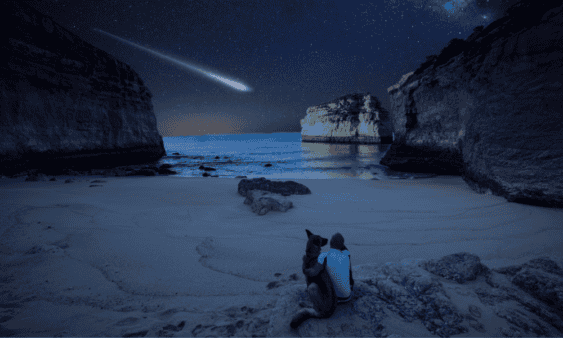
The Orionids, which peak during mid-October each year, are considered to be one of the most beautiful showers of the year. Orionid meteors are known for their brightness and their speed. These meteors are fast—they travel at about 148,000 mph (66 km/s) into the Earth’s atmosphere. Fast meteors can leave glowing “trains” (incandescent bits of debris in the wake of the meteor) which last for several seconds to minutes. Fast meteors can also sometimes become fireballs: Look for prolonged explosions of light when viewing the Orionid meteor shower.
The Orionids are created by debris left behind by Halley’s Comet, which Earth passes through each October. The shower is active from October 2 through November 7, 2026, with its expected peak on the night of October 21-22, 2026. The Orionids are also framed by some of the brightest stars in the night sky, which lend a spectacular backdrop for these showy meteors.
The Orionids are considered a medium-strength meteor shower, typically producing 10-20 meteors per hour at maximum under ideal conditions. In exceptional years, peak rates have reached 50-75 meteors per hour, although recent displays have generally been more modest.
Will the Moon Affect the 2026 Orionids?
Unfortunately, yes. The Moon will be about 80% full on the night of the Orionids’ peak, so bright moonlight will wash out some of the fainter meteors and make 2026 a less-than-ideal year for viewing.
For the best chance of seeing meteors, get as far away from city and street lights as possible. Even with the bright Moon, the Orionids’ brightest meteors should still be visible under clear, dark skies.
Viewing Tips
The Orionids are viewable in both the Northern and Southern hemispheres during the hours after midnight. Find an area well away from city or street lights. Come prepared with a sleeping bag, blanket, or lawn chair.
Lie flat on your back with your feet facing southeast (in the Northern Hemisphere), and look up, taking in as much of the sky as possible. You don’t need to stare directly at the constellation Orion—the meteors can appear anywhere across the sky.
In less than 30 minutes in the dark, your eyes will adapt and you will begin to see meteors. Be patient as the show will last until dawn
Read more at American Meteor Society
Disclaimer: Please double check event information with the event organizer as events can be canceled, details can change after they are added to our calendar, and errors do occur.
Cost: FREE
Categories: **Annual Event**, *Top Pick*, Celestial Events, In Person, San Francisco Bay Area


